News

Radio-Canada’s “Enquête” reveals the urgency of the situation in Quebec: let’s act!

Written by the BESA team

November 19, 2026

For three years, a citizen collective led by a young couple filmed inside some one hundred livestock farms and slaughterhouses in Quebec, selected at random. In its November 19 investigation “Le silence des troupeaux” (The Silence of the Herds), Radio-Canada’s program Enquête reveals this footage: animals confined, injured, sick or dying.

Sadly, these terrible images come as no surprise to anyone who looks into animal agriculture in Quebec. The investigations BESA has released over the years, the data collected, the statistics and the observations made on the ground already pointed to this conclusion. This new investigation, however, allows the general public to fully grasp a reality that has been there for a long time: on the vast majority of Quebec farms, ethical considerations and respect for values have given way to the demands of profitability, at the expense of animal welfare. And neither farmers, nor consumers, nor animals come out ahead.

Beyond the reality it exposes, this documentary is a call to action. Today more than ever, Quebec’s animals need you.

Far from the ads

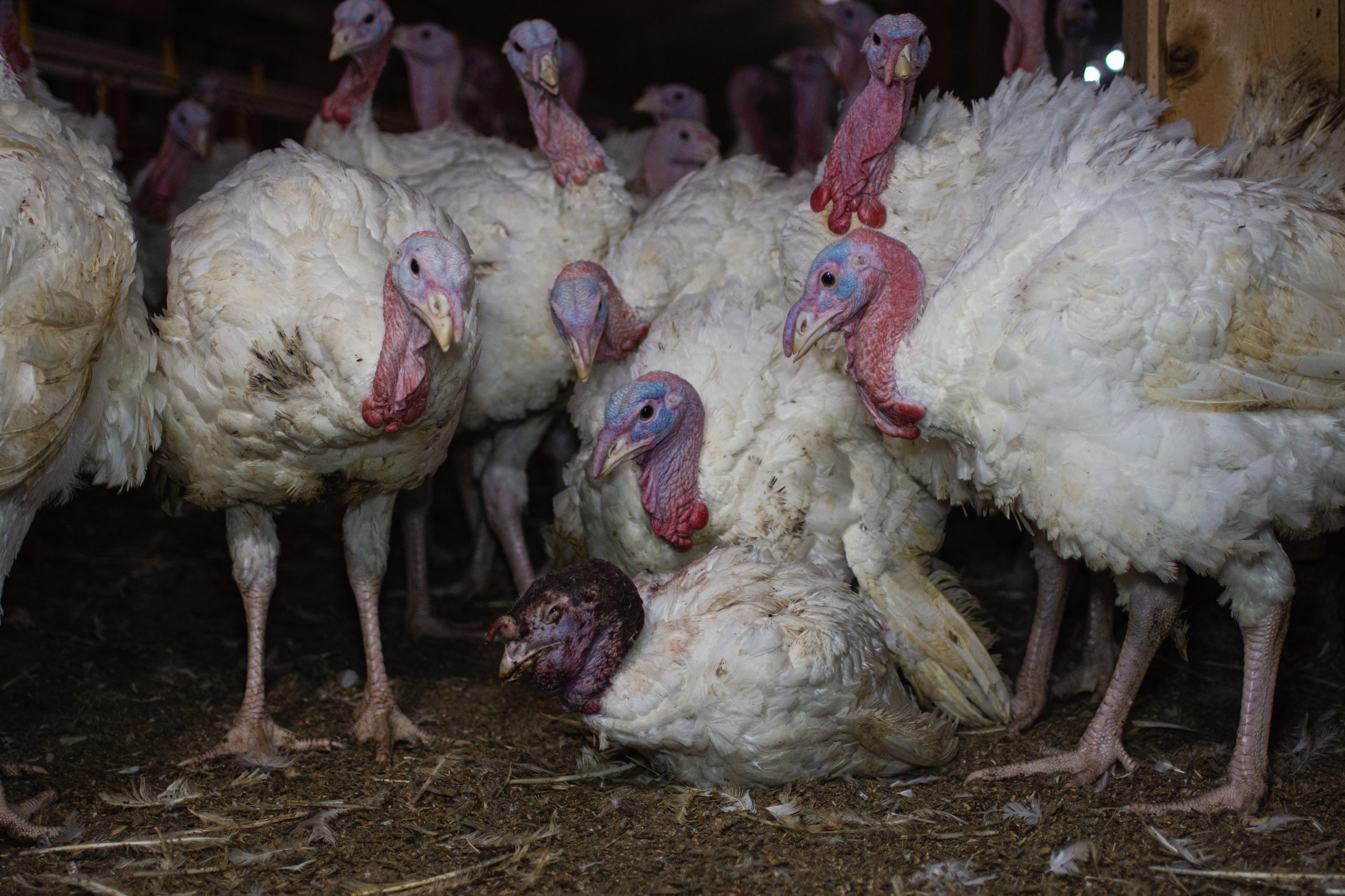
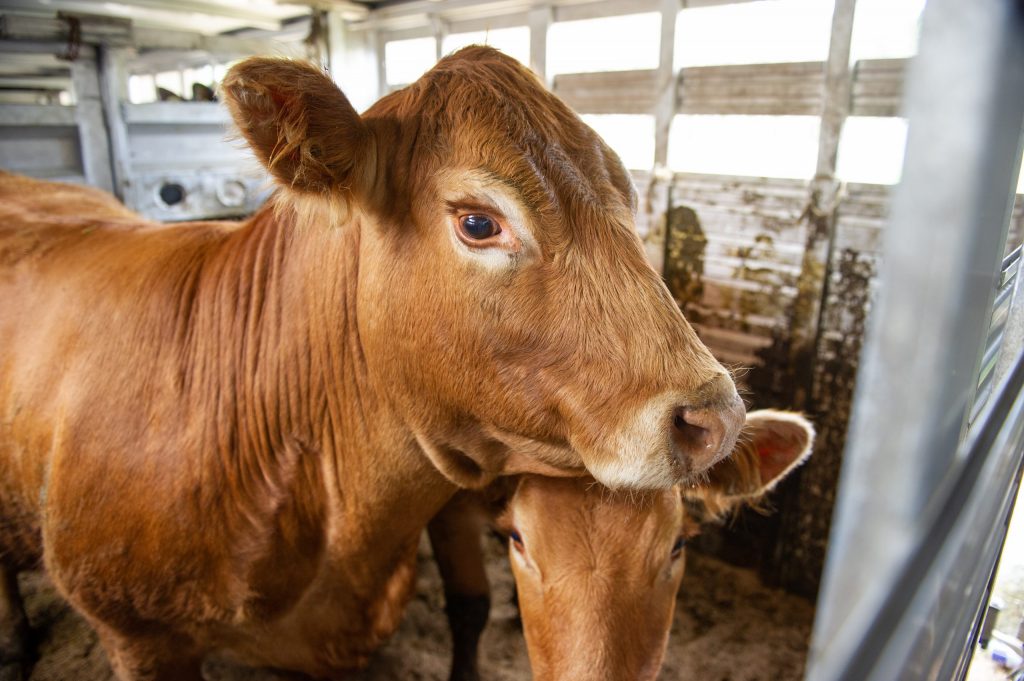
On packaging and in advertising, Quebec livestock farming looks like a small family farm with a few cows in the pasture. Yet most animals raised here live confined in intensive farming buildings: chickens, laying hens, pigs, often by the thousands under one roof. Every year in Quebec, more than 200 million animals are slaughtered for meat, Radio-Canada reports. According to the collective behind the documentary’s footage, there are so many of them that farmers cannot give each one the care it needs.

This system doesn’t benefit farmers either. They are asked to look after an enormous number of animals, in a model out of step with the values of many Quebecers, for profits that are always fragile. On top of that come the risks of climate and disease. Heat waves drive up mortality in barns, especially among sows, and a single drought is enough to send the price of forage soaring. As for avian flu, it arrives with migrating wild birds, then travels from farm to farm with people, vehicles and equipment. In buildings where thousands of birds live packed tightly together, the virus spreads very quickly, and it forces entire flocks to be euthanized: since 2022, more than 1.4 million birds have been infected in Quebec. And that is without counting buildings and equipment that are ever more costly to maintain and pay for.

Gestation crates as far as the eye can see, in a pig farrowing operation. Photo: BESA investigation of a swine nursery in Montérégie

Cruelty permitted by law

An exemption for agriculture

According to Radio-Canada, under the law, docking the tail of a pet pig without anesthesia could, in extreme cases, land you in prison. On the farm, however, it is a common and legal practice.

How is this possible? The Animal Welfare and Safety Act, adopted in 2015, recognizes that animals are sentient beings. However, section 7 provides an exemption: for agricultural activities, the law defers to “generally recognized rules.” As a result, farmed animals, more than 200 million of whom are slaughtered in Quebec every year, are the ones the law protects least.

A sow in a gestation crate, where she cannot turn around. Photo: BESA investigation of a swine nursery in Montérégie

Rules written with the industry

These “generally recognized rules” rest mainly on codes of practice developed with the industries and farmers’ associations. In other words, those who profit from livestock farming help decide how the animals must be treated.

To enforce these rules, we rely on the Ministry of Agriculture, whose mission also includes supporting the development of the agri-food sector. The ministry is therefore in a serious conflict of interest: it must both promote the sector’s prosperity and protect animal welfare, two goals that are almost always at odds. That is why it is essential for the government to entrust an independent body with responsibility for the welfare of Quebec’s animals, including farmed animals.

A race to the bottom

To produce ever more at the lowest cost, more animals are packed into less space, line speeds go up and less time is spent on care. Animal welfare then becomes an expense to cut, and it is the animals who pay the difference.

For their part, successive governments have let the industry carry great weight in writing its own rules, and they have done little to help farmers who would like to switch to plant crops. Yet for Quebec to consume so much chicken, pork and beef, animals must be raised and slaughtered in very large numbers. Although plant-based alternatives to meat and other animal products have existed for a long time, many consumers feel they have no choice, or are not informed about them. The development of these alternatives deserves to be supported and subsidized, to help our food systems become more robust, more resilient and more in line with our values.

Quebec is lagging behind

Other countries have written specific protections into their laws. In the European Union, conventional cages for laying hens have been banned since 2012 and, since 2013, sows must be housed in groups for most of their pregnancy. In Quebec, by contrast, these matters are still largely governed by codes developed with the industry.

As long as these rules don’t change, other investigations will show the same images. It is up to us to choose: act, or stay silent. Do we want this situation to go on for another 5, 10, 20 years? Or do we finally want a Quebec that is fair to animals?

What we are asking for

Fortunately, two changes would directly address the problems revealed by the investigation. We are asking the Government of Quebec:

  • to entrust animal welfare to a body independent of the Ministry of Agriculture (MAPAQ). The ministry could continue to support the sector, and protecting animals would fall to people whose only mission it would be;
  • to have codes of practice written by independent bodies, no longer by the industries. The rules would then be based on science and on animals’ needs, rather than on what costs the least.

These changes are essential for animals, but they are only the bare minimum we owe them as a society. We should have entrusted their welfare long ago to people who have no interest in weakening the rules.

Two possible futures

Imagine Quebec a few years from now. An independent body looks after farmed animals, without having to spare an industry. Codes of practice are based on science, and farmers who want to switch to plant crops get support. Our society makes real efforts to reduce the number of animals killed, and the rules governing their welfare form a minimum standard that is strictly enforced.

Now imagine the other scenario: two weeks from now, no one talks about the investigation anymore. The rules stay the same and, a few years later, a new investigation shows the same images. By then, millions of animals will have lived and died in these conditions.

We are now at a crossroads. That first, brighter future is ours to bring about by pushing our government to act.

Why now

An investigation of this scale is rare. The program is respected, Quebec is talking about it, and the Minister of Agriculture says he has been given a mandate to make the welfare of farmed animals a priority. Elected officials are now watching how the public reacts.

Farmed animals can neither break out of their cages nor speak up. If enough of us make ourselves heard this week, Quebec can become fairer to them, in its laws and on its farms, and not just in advertising. If we stay silent, nothing will change.

Animals can’t pick up the phone. You can!

Your turn!

MNAs’ offices keep count of the calls and emails they receive on an issue. The more of us who talk to them about farmed animals this week, the more weight our message will carry.

I’ll contact my MNA

Taken action? Thank you!

An investigation like Enquête’s gives Quebec’s farmed animals a rare chance to be heard. Call and email campaigns like this one have already paid off, and their weight depends on how many people take part.

Now is the time! Share this call to action and the tool with your friends and family and on social media: every person who contacts their MNA adds a voice for animals.

By the way, would you like to sign up for our newsletter? You’ll find out what becomes of these requests, and how to keep taking action with us!

Join our newsletter !

Receive the latest news about BESA’s actions, animals in Quebec, and ways to help them.


You want to do more for them ?

Whether it’s by reducing your consumption of animal products, or by using your passion and talents to defend their rights, there are many ways to help animals in Quebec.


Discover the best ways to act simply, and at your own pace, for animals!